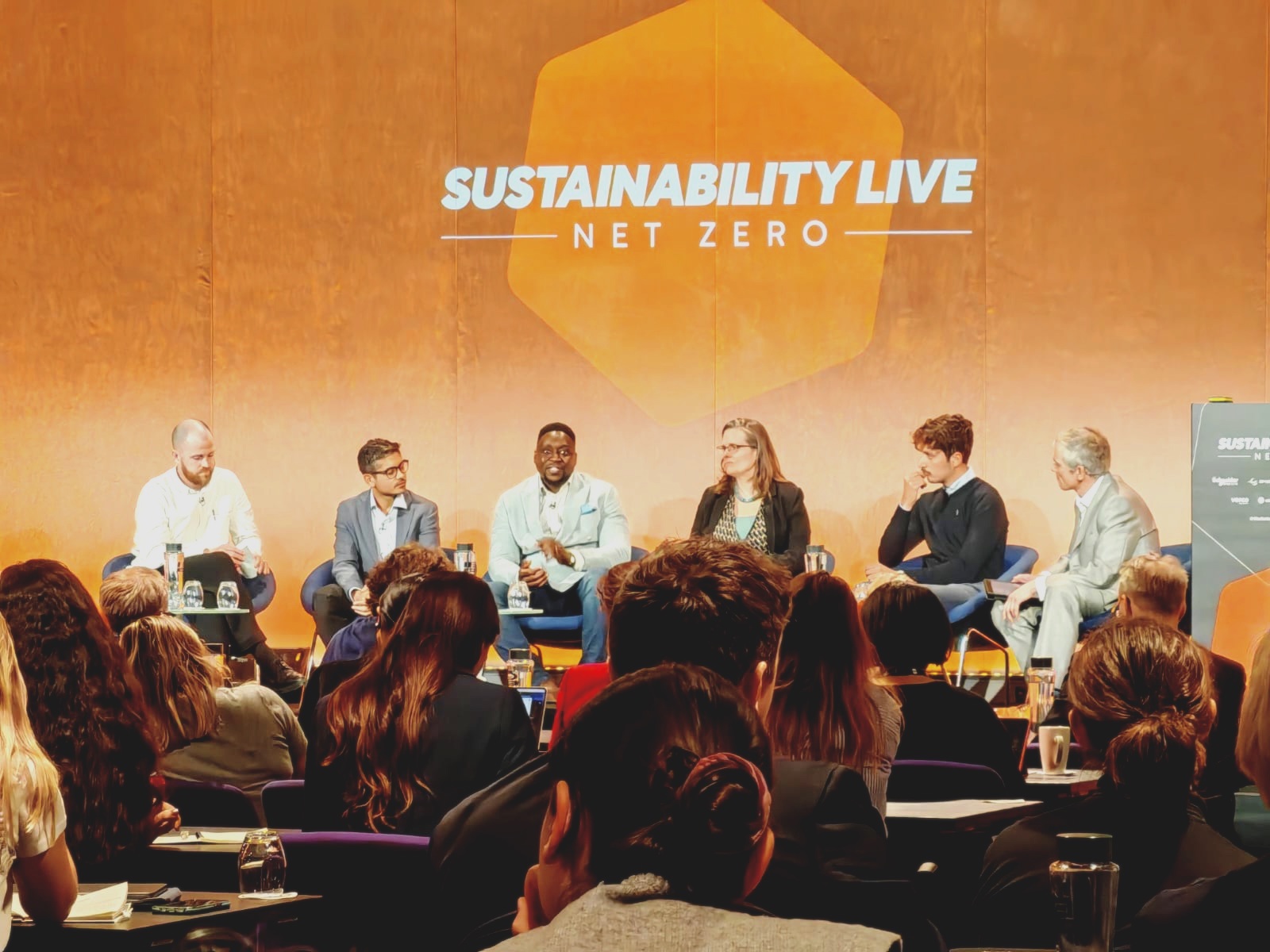
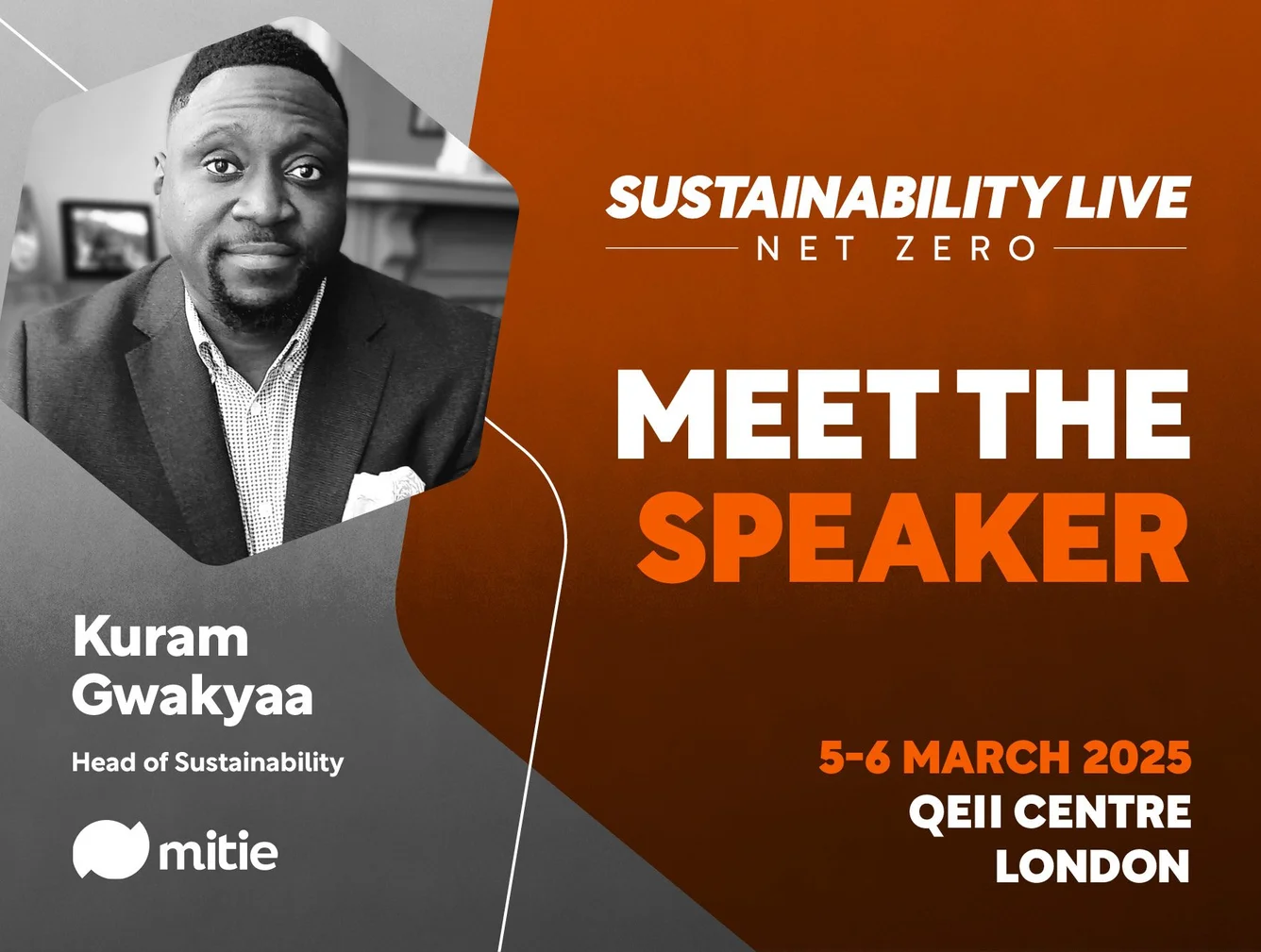
Ahead of Sustainability LIVE: Net Zero at the QEII Centre, Kuram Gwakyaa, Head of Sustainability at Mitie Group, spoke with Sustainability Magazine about the upcoming Global ESG Strategies panel, navigating emerging regulatory frameworks, and why integrating DEI into sustainability is vital for long-term business resilience.
Context: Sustainability LIVE: Net Zero 2025
Held at London’s QEII Centre on 5–6 March 2025, Sustainability LIVE: Net Zero brings together sustainability leaders, investors, and supply chain specialists to explore practical pathways toward a carbon-neutral future.
Co-located with Procurement & Supply Chain LIVE: Sustainability, the summit addresses key drivers of the global net-zero agenda—from ESG reporting mandates and carbon pricing mechanisms to low-carbon logistics and circular economy models.
At the summit, Kuram Gwakyaa joins the ‘Global ESG Strategies’ panel alongside:
- Joe Murphy, Executive Lead, Ellen MacArthur Foundation
- Michael Batstone, Global Climate Strategy Manager, IFS
- Olivia Ruggles-Brise, Vice President for Sustainability, BCD Travel
What Inspired Your Involvement in Sustainability LIVE: Net Zero?
“Having previously attended Sustainability LIVE, I found that the event presented attendees with an array of adaptable ideas and insights that emanated from the keynote speakers and panel discussions.
It also provided a valuable opportunity to network and connect with other industry peers, which is particularly beneficial in terms of sharing experience and best practices. As a result, I felt inspired to get involved because it is the right platform for sharing ideas and broadly raising awareness for Sustainability.”
(Note: Mitie was recognized at the Global Sustainability & ESG Awards 2024, taking home the Diversity Award for its dedication to driving equity and inclusion across operations.)
Global ESG Strategies: What Will the Panel Focus On?
With ESG performance increasingly tied to commercial success for industry leaders like Mitie, the panel explores how organizations transition from high-level commitments to operational reality.
“With the increasing importance of ESG considerations for top-performing organisations like Mitie, my panel discussion will focus on providing attendees with insights into the development and implementation of global ESG strategies.
The discussion will revolve around operationally embedding and integrating ESG principles, taking into account regulations, supply chain considerations, innovation and sustainable growth.”
Key Objectives for the Event
Kuram outlined three primary goals for participating in Sustainability LIVE: Net Zero:
- Engage with Cross-Sector Leaders: Connecting with peers across industries to align on shared decarbonisation hurdles.
- Exchange Adaptable Ideas: Gaining actionable insights and operational methodologies that can be implemented on major accounts.
- Advance Industry Knowledge: Contributing to the broader discourse and raising awareness through active panel dialogue.
Emerging Trends Shaping the Next Decade of Sustainability
Reflecting on recent developments—including the UK SDR aligning with ISSB and the EU Corporate Sustainability Due Diligence Directive (CSDDD)—Kuram outlined key areas set to define sustainability over the next decade:
1. Responsible Sourcing & Full Value-Chain Visibility
Supply chain scrutiny is intensifying. Organizations must understand their full end-to-end value chain, leveraging technologies such as blockchain for traceability and adopting near-shoring strategies to mitigate geopolitical risk while curbing freight emissions.
2. Corporate Transparency & Double Materiality
The era of surface-level reporting is over. Scrutiny-proof strategies now demand double materiality assessments, where companies evaluate both the financial materiality of climate risks to their business and the outward environmental and social impact of their operations.
3. Green Finance & Nature-Based Solutions
Financial instruments are pivoting toward environmental restoration. Following pivotal discussions at COP16 and COP29, green finance will play a decisive role in funding biodiversity initiatives and nature-based solutions alongside traditional carbon reduction.
4. Navigating the Energy Transition
While global investment in renewables now outpaces fossil fuels, the transition faces mounting complexity due to shifting geopolitical dynamics, grid capacity bottlenecks, and volatile market forces.
Deep Dive: DEI Integration as a Driver of Business Resilience
Among these trends, Kuram emphasized that the integration of Diversity, Equity, and Inclusion (DEI) into ESG strategies is one of the most critical evolutions for modern enterprises.
“From my perspective, the growing focus on DEI and its integration within ESG strategies is the trend to watch in terms of embedding ESG within business operations as well as contributing to business resilience.
This is particularly pertinent, given that organisations are recognising that the role of ESG has shifted from a ‘nice to have’, to a strategic ‘must-have’. ESG’s relevance to investment, talent attraction, retention and competitive advantage has become clear. One key element of this trend is the focus on people, captured within the Social Value aspect that encompasses DEI.”
Why DEI is Essential to Commercial Success
- Tender & Contract Requirements: In sectors like facilities management, Social Value and robust DEI commitments are increasingly mandatory within public and private procurement criteria. Having a demonstrable DEI framework is decisive in winning new business.
- Attracting and Retaining Top Talent: Modern professionals increasingly select employers based on workplace culture, wellbeing, and inclusive environments.
- The Multi-Generational Workplace: Citing research from Ernst & Young (EY), Kuram highlighted that for the first time, five distinct generations (Boomers, Gen X, Millennials, Gen Z, and Gen Alpha) are collaborating in the workplace. Managing this diversity requires proactive leadership focused on continuous upskilling and AI-driven engagement.
- Data-Driven Decision Making: Advances in AI and analytics provide real-time engagement data and benchmarking, enabling leadership teams to make responsive, measurable decisions across their workforce.
“Although there are understandable complexities associated with DEI integration, it is an area that would gather momentum and has the potential to support a meaningful and impactful ESG transformation in the next decade.”
Watch the full interview with Sophie Rice on Sustainability Magazine.